Last-Minute Save to Prevent Chaos
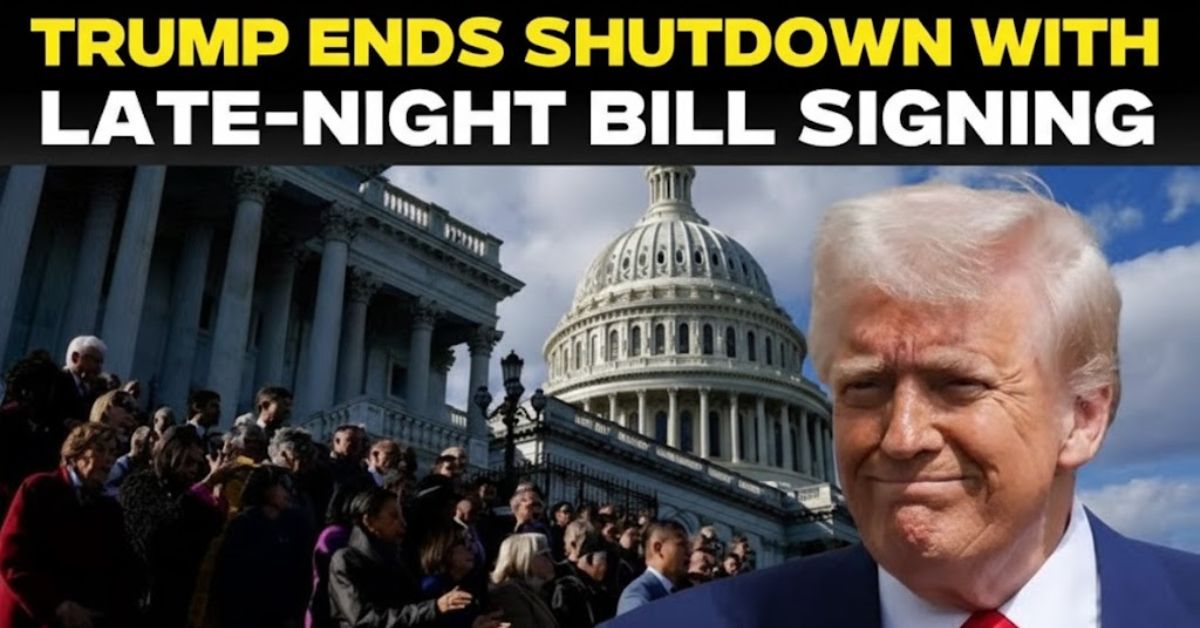
In a dramatic turn of events, former U.S. President Donald Trump signed a critical stopgap bill in a bid to stave off what could have been a prolonged and devastating government shutdown. The signing of this temporary funding measure was hailed as a much-needed moment of relief, keeping the federal lights on—for now. However, the move has left lawmakers and analysts questioning how much this patchwork fix will accomplish as another fiscal showdown looms right around the corner.
| Key Highlights | Details |
|---|---|
| President | Donald J. Trump |
| Bill Signed | Stopgap Bill (temporary funding) |
| Shutdown Avoided | Prevented major government shutdown |
| Immediate Impact | Federal funding extended to avoid a halt |
| Potential Challenges Ahead | Upcoming negotiations for a long-term deal |
The bill, a short-term solution, was approved in the midst of heated debates and mounting pressure to keep essential services running uninterrupted. On the surface, it represents a win for governance, but dig a little deeper, and you’ll find a political balancing act that is far from over. While this temporary reprieve ensures funding for federal programs and employees for a limited duration, it also throws the country back into the turbulent waters of budget negotiations.
This article dives deeper into the significance of Trump’s decision, the immediate effects on the American public, and the concerns brewing for the future as the nation inches closer to yet another fiscal crossroads.
What is a Stopgap Bill and Why Was It Needed?
Before understanding the magnitude of this decision, it’s important to dissect what a “stopgap bill” is and why it plays such a pivotal role in U.S. governance from time to time. A stopgap bill is essentially a temporary measure to fund the government when Congress hasn’t agreed on a comprehensive budget. Without it, funding for federal agencies halts, leading to a dreaded government shutdown.
The need for this bill arose when the divided Congress failed to meet its deadline for the national budget. Faced with hours to spare before federal operations would come to a screeching halt, this temporary funding measure was the best and quickest way to prevent widespread consequences.
President Trump’s decision to push forward with the stopgap bill wasn’t just a matter of signing papers—it reflected a broader political strategy to buy more time for Congress to come to a consensus. The bill provides funding for a limited period, ensuring critical operations such as healthcare access, national security, and disaster relief continue without interruption.
Relief for Federal Workers and Services
The biggest beneficiaries of this stopgap bill are the hundreds of thousands of federal employees whose paychecks were hanging in the balance. Without this measure, government workers across various agencies, from TSA officers to park rangers, would face furloughs or be required to work without pay.
Federal agencies like the Department of Defense, NASA, and the Food and Drug Administration heaved a sigh of relief as funding gaps that would have halted operations have now been temporarily bridged. However, the relief is bitter-sweet. While paychecks will still be issued, employees remain uncertain about their long-term job security as Congress figures out the budget in weeks to come.
Additionally, crucial services such as disaster funding for extending relief efforts in areas affected by wildfires, hurricanes, and floods remain operational because of the stopgap measure. Programs related to public healthcare, student aid, and social security administration receive a temporary lifeline under this decision, ensuring that millions of Americans continue to access essential services seamlessly.
Political Drama Behind the Scenes
While Trump’s signing of the critical stopgap bill marks a moment of resolution, it’s impossible to ignore the intense political wrangling that preceded it. The bill’s passage through Congress was marked by ideological divides that have become emblematic of modern American politics.
One of the major sticking points that delayed progress in budget negotiations was the allocation of funds to controversial programs. Debates over financing border security, immigration policies, and government-entitlement programs created a lengthy standoff between Democrats and Republicans. In particular, the allocation of resources for expanding immigration control became a contentious issue, with Trump’s administration strongly advocating for increased funding in this area.
The political divide wasn’t just a matter of partisanship—it was also reflective of the growing division within parties themselves. Even among Republicans, there were disagreements over certain spending priorities. Meanwhile, Democrats pushed hard to include provisions for funding healthcare programs and environmental causes into the broader fiscal discussion.
Ultimately, the stopgap bill represents an uneasy compromise. It sidesteps the more divisive issues for now, kicking the proverbial can down the road as both parties scramble to finalize a long-term solution in the near future.
What Happens Next?
While the signing of the critical stopgap bill has averted a government shutdown for now, its temporary nature means the clock is ticking. The bill only provides funding for a limited amount of time—weeks in some cases or a couple of months in others. This short time frame puts immense pressure on lawmakers to buckle down and hammer out a more comprehensive budget.
Experts are already cautioning that the upcoming fiscal negotiations are likely to be even more combative than the debates preceding the stopgap measure. Issues that were put on hold—like funding border wall expansions and increasing healthcare subsidies—are expected to reignite fiery debates among party factions. Adding to the uncertainty is the challenge of balancing deficit concerns against demands for increased spending in areas like infrastructure and defense.
For now, Americans across the nation are relieved that crucial services remain operational, but the temporary nature of their relief is evident. The fear of yet another shutdown will continue to linger as we watch events on Capitol Hill unfold over the next few weeks.
Table: Key Differences Between Stopgap Bill and Full Government Budget
| Aspect | Stopgap Bill | Full Budget |
|---|---|---|
| Duration | Short-term (weeks–months) | Long-term (1 year or more) |
| Purpose | Temporary funding to prevent immediate shutdowns | Comprehensive financial planning for all federal programs |
| Detailed Allocations | Minimal | Fully detailed and sector-specific allocations |
| Political Tension Level | High (unfinished business) | Often contentious, but more complete during approval |
Public Opinion Following the Stopgap Measure
The reaction from the public to Trump’s signing of the stopgap bill has been mixed. Many Americans expressed relief that the federal government would continue to function, but concerns remain about the lack of long-term solutions. For workers and business owners directly impacted by past shutdowns, this temporary fix feels akin to walking on eggshells—necessary, but unsustainable.
Social media saw an explosion of opinions regarding the bill, with some praising the move as a pragmatic decision and others viewing it as an avoidance of real conflict resolution. People in states heavily dependent on federal funding, especially regions impacted by natural disasters like California and Florida, have expressed cautious optimism but are keenly aware of the challenges that lie ahead.
What This Means for the Everyday American
For the average American, Trump’s signing of the stopgap bill means life can go on uninterrupted—for now. Access to social security benefits, the continuation of disaster relief operations, and the smooth processing of federal aid applications remain intact. For low-income families dependent on federal food programs and unemployment assistance, this bill protects their safety net, albeit temporarily.
But what about everyday concerns like taxes, healthcare, and education funding? While the bill has likely averted immediate chaos, sectors heavily reliant on federal budgets—like public schools and food assistance programs—remain in a state of limbo. Parents, small business owners, and senior citizens are left watching and hoping the government can finally stitch together a budget that offers stability.
FAQs on Trump Signing the Critical Stopgap Bill
Q: What is a stopgap bill?
A: A stopgap bill is a temporary measure that provides funding for the federal government to avoid a shutdown when Congress fails to pass a full-year budget on time.
Q: How long will the stopgap bill fund the government?
A: The current bill provides funding for a limited period, typically spanning weeks to a few months, depending on specific legislation.
Q: Why didn’t Congress pass an annual budget instead?
A: Continued political disagreements over spending allocations for programs like border security, healthcare, and military funding have delayed the approval of a comprehensive budget.
Q: Did the stopgap bill address the key disagreements between parties?
A: No, the bill mostly sidesteps the more contentious issues, giving lawmakers additional time to negotiate and reach consensus.
Q: Could another government shutdown happen soon?
A: Yes, unless lawmakers negotiate and pass a comprehensive budget or another funding measure, the country could face another potential shutdown in the near future.
Conclusion: A Temporary Victory Amid Long-Term Challenges
President Trump’s decision to sign the critical stopgap bill has undoubtedly saved the nation from the immediate chaos of a government shutdown. Federal workers remain employed, essential services continue to function, and for now, millions of Americans can breathe a sigh of relief.
However, this temporary measure is far from a resolution. It essentially serves as a “pause button” on the growing fiscal clash in Washington, D.C.—one that is likely to resurface in the coming weeks. The lack of long-term planning leaves citizens and policymakers alike grappling with uncertainty, wondering if the next showdown will yield a better, more definitive solution.